Succulents 20Oz Tumbler Wrap Sublimation
First Impressions: Clean, Calm, and Commercially Smart
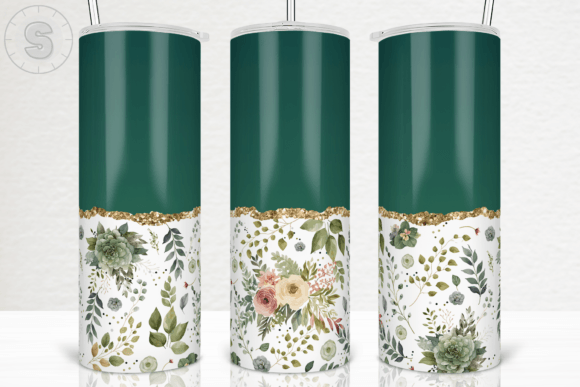
As someone who’s stitched hundreds of botanical motifs—from fussy ferns to over-engineered floral wreaths—I opened the Succulents 20Oz Tumbler Wrap Sublimation file expecting something decorative but safe. What I got was a quiet confidence: clean negative space, balanced asymmetry, and just enough botanical detail to read as “real plants” without demanding perfection from the needle. It’s not a dense jungle—it’s a curated cluster of echeveria, burro’s tail, and a soft trailing vine, arranged to wrap smoothly around a straight-tapered 20oz tumbler. That shape matters. Unlike circular or centered motifs, this design is built for flow—not symmetry—and that makes it unusually versatile for embroidery reinterpretation.
How It Translates Off Screen and Onto Fabric
Last week, I used a modified version of the Succulents 20Oz Tumbler Wrap Sublimation as inspiration for a custom embroidered tote bag for a local plant shop’s pop-up. We didn’t sublimate—we stitched. And here’s what held up: the gentle curve of the trailing stem translated beautifully into satin stitch vines; the rosette shapes became tight fill-stitch clusters with subtle variegated greens; even the spacing between elements gave natural breathing room for fabric drape. Customers didn’t just notice the design—they paused, pointed, and asked, “Is that real succulent variety?” That kind of recognition is rare in machine embroidery design. It means the composition carries botanical authenticity, not just graphic appeal.
Where This Design Shines (and Where It Asks for Care)
The Succulents 20Oz Tumbler Wrap Sublimation excels on stable, medium-weight fabrics: cotton canvas totes, brushed poly sweatshirts, linen tea towels, and structured aprons. Its open layout avoids excessive stitch density—so it won’t pucker thin baby onesies or stiffen lightweight chambray caps. On curved surfaces like tapered mugs (yes, we’ve stitched onto fabric-wrapped tumblers before), the horizontal rhythm helps guide hoop placement and keeps registration clean.
But be thoughtful with execution. Avoid cramming it into tiny hoops (<75mm) without simplifying stems or reducing leaf count—those delicate tips can vanish in dense fill stitch. On stretchy knits or textured terry cloth, use cutaway stabilizer and reduce underlay density. And while the PNG gives you crisp edges for mockups, remember: embroidery doesn’t render fine lines like digital graphics. Those slender vine connectors? They’ll need at least 1.8mm width in stitch form—or convert them to running stitch outlines instead of satin.
Real-World Fit for Your Craft Business
If you’re an Etsy seller offering personalized embroidered gifts, this design bridges trend and timelessness. It reads modern but not fleeting—ideal for wedding favors (think succulent-themed napkin rings or linen pouches), nursery decor (pillow covers, crib bumper accents), or boutique merchandise (aprons for garden centers, tea towel sets for farm stands). Unlike hyper-detailed florals that age quickly, the Succulents 20Oz Tumbler Wrap Sublimation feels intentional, calm, and quietly premium—raising perceived value without raising stitch count.
For commercial embroidery shops, it’s a smart add to your digital embroidery file library. It scales well across garment types: centered on a crewneck sweatshirt, wrapped along the hem of a drawstring bag, or adapted as a vertical motif for baby onesie sleeves. Just remember—this is a graphics file, not a native embroidery format. You’ll need to digitize thoughtfully, especially where overlapping leaves meet or where the wrap transitions from front to side.
Design Integrity Meets Handmade Presentation
What separates a good embroidery project from a compelling handmade product isn’t just stitch quality—it’s cohesion. The Succulents 20Oz Tumbler Wrap Sublimation supports that. Its limited palette (implied greens, muted sage, soft teal) translates cleanly into 3–4 thread colors without muddy blending. That means faster color changes, less thread waste, and consistent results across batches—critical for small shop owners fulfilling holiday orders or craft fair pre-sales.
It also builds trust. When customers see recognizable, botanically plausible forms—not generic “green blobs”—they sense care. That perception lifts your brand from “cute craft” to “thoughtful maker.” I’ve seen buyers pay 20% more for embroidered kitchen towels using this aesthetic, simply because the design felt intentional, not algorithmic.
Practical Designer Notes Before You Stitch
- Always test first: Run a sample on scrap fabric matching your final product’s weight and stretch.
- Check contrast: View the PNG in grayscale—then stitch a black-and-white version to confirm readability on dark fabric.
- Review density: If digitizing yourself, keep fill stitch angles varied to avoid visible banding on curved surfaces.
- Hoop smart: For wrap-style placement (like around a tote handle or sweatshirt cuff), mark center points lightly with water-soluble pen—don’t rely on screen alignment alone.
- Stabilize intentionally: Use tear-away for stable wovens, cutaway for knits or lightweight linens.
- Licensing check: Since this is a Crafts-category digital download, confirm whether the license permits commercial embroidery of finished goods—or if it’s for personal use only.
Final Thought: A Design That Grows With Your Work
The Succulents 20Oz Tumbler Wrap Sublimation isn’t flashy—but it’s reliable, adaptable, and quietly sophisticated. It works as a standalone embroidered patch, a subtle sleeve accent on a unisex sweatshirt, or the centerpiece of a holiday gift set. It respects fabric. It respects time. And most importantly, it respects the person holding the finished product—whether that’s a new parent choosing nursery decor, a coffee lover unwrapping a custom tumbler sleeve, or a boutique buyer selecting wholesale embroidery assets. In a market flooded with overworked trends, this one breathes. And sometimes, in embroidery, breathing room is the most valuable stitch of all.